-
Glazed Herb Planter
I love to have fresh herbs around the house. Don’t you? Even if you don’t use them to cook, many times they are just lovely to smell.
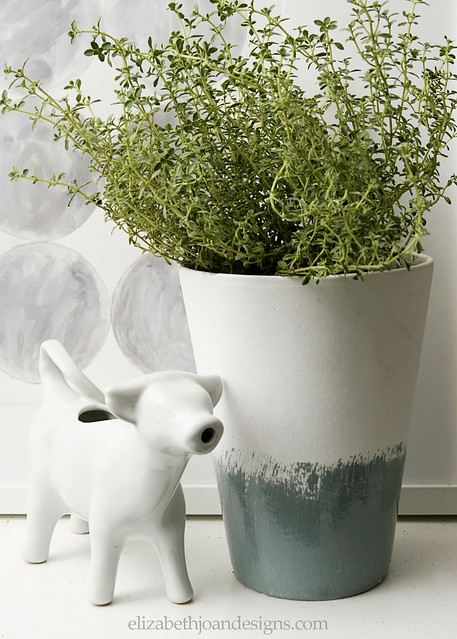
My husband brought home a potted grouping of random, not labeled herbs for me from Trader Joe’s. I didn’t have a planter big enough for all of them, so I had to find something to put one remaining herb plant in.
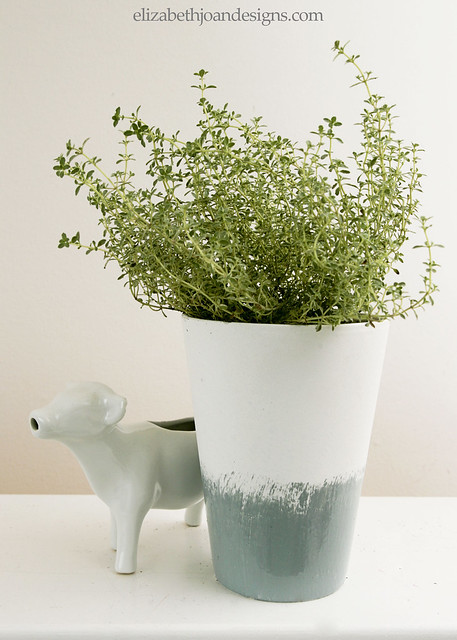
Lucky for me, I found this totally-not-my-style pot at Goodwill for a song and knew I could make it over with my wicked awesome DIY skills. (Technically, I’m just good at trial and error, but whatever.)

I knew that I wanted some sort of hand dipped/glazed look, so I started out by spray painting it with Zinsser primer to cover up all of those splattered speckles. This gave the planter a flat finish and would allow for other paint to easily adhere.
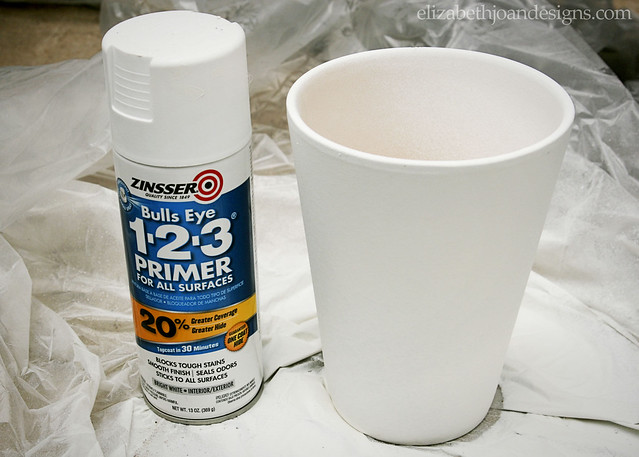
Once it was dry, I used a paint brush to apply high gloss gray paint to the lower portion. Did you know that The Home Depot doesn’t sell paint samples in any finish other than flat? I didn’t, that is, until yesterday when I went to get some gray paint. And I wanted high gloss. Bummer. So, I had to be resourceful and decided to purchase some spray paint instead. I sprayed it into a puddle onto a piece of cardboard and dipped my brush right into it to apply my gray paint.

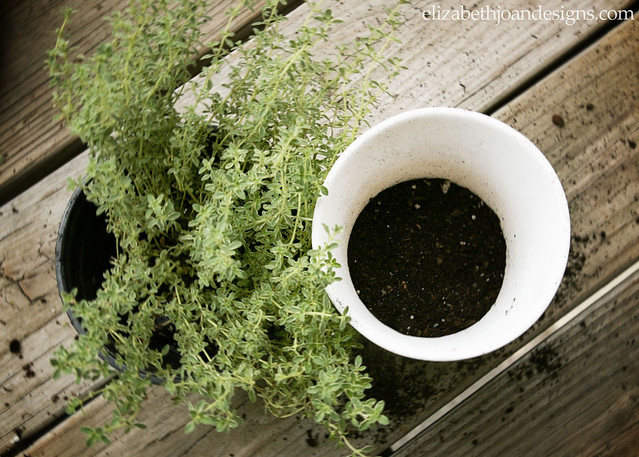
Then I waited for that to dry. Once it was ready, I filled the bottom of the planter with stones for drainage, added some potting soil and my lonely little leftover herb plant.
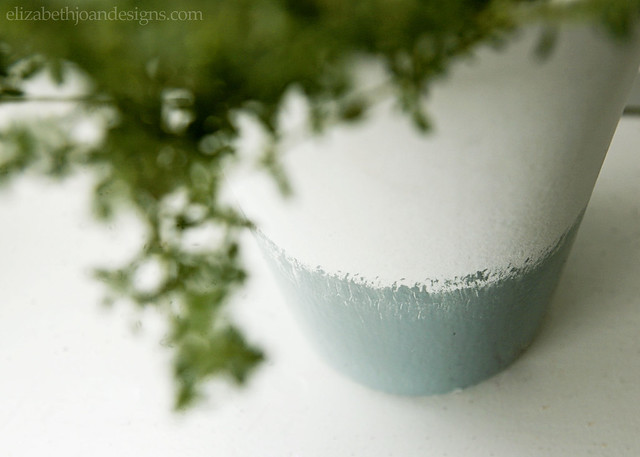
You can see here how my planter doesn’t have that perfect crisp edge where the color ends. I did that intentionally, because as much as I love the look of hand dipped pottery, I wanted something with more of an organic feel. The flicked brush strokes at the edge do just that, since they are more haphazard.
We love how it turned out, but I still can’t figure out what kind of herb this is. If you know, we would love to hear from you in the comments below!

-
The Garage Files
At one point, I even tried my hand at stenciling in an attempt to spiffy it up and you can see how well that worked out. Oops.
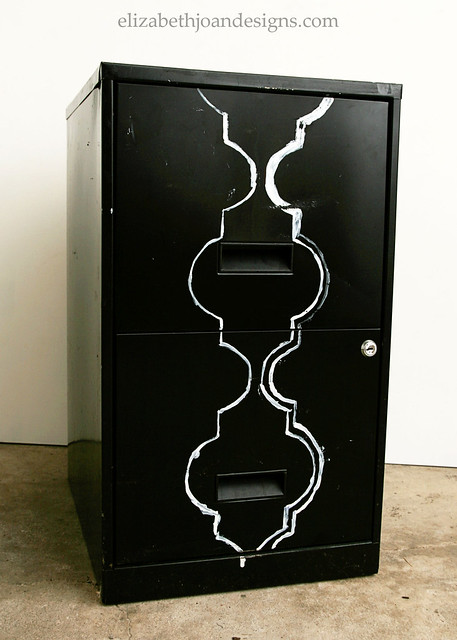
I started out by giving it a good wipe down to remove the dust. And cobwebs, which don’t really go well with anything except Halloween decor. Next, I removed the drawers and sent them packin’.

Stripes are pretty cool and I knew I definitely wanted to put a stripe on my cabinet, but I also wanted to include some type of text. I figured “clean up” was pretty motivational for garage organization, so that’s what was printed on a large waterproof label. The problem was that I didn’t realize that the label I had just printed out on my inkjet printer was actually for a laser printer. Oops #2. The ink attached itself to everything my hands touched, as I struggled to cut it out. Smudgy Smudgerson.

However, I didn’t let a little ink stop me. On went the painter’s tape and the sullied words.
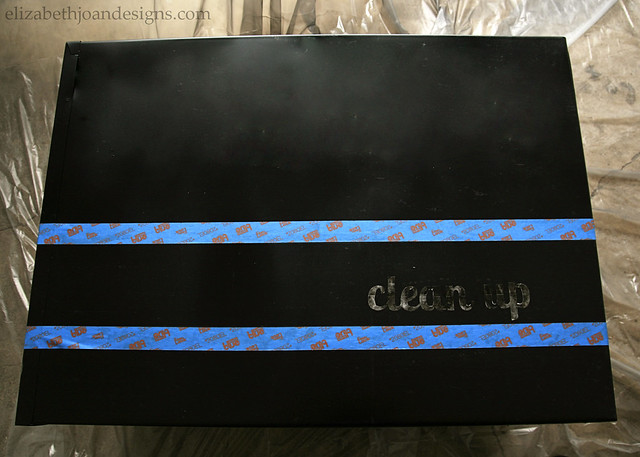
Using semi–gloss white paint, I carefully brushed over the words, being mindful of the tape edges. After a bit, everything was dry. When I removed the tape and letters though, I found that the paint had leaked through (under?) and messed up my cute wording. Oops #3.
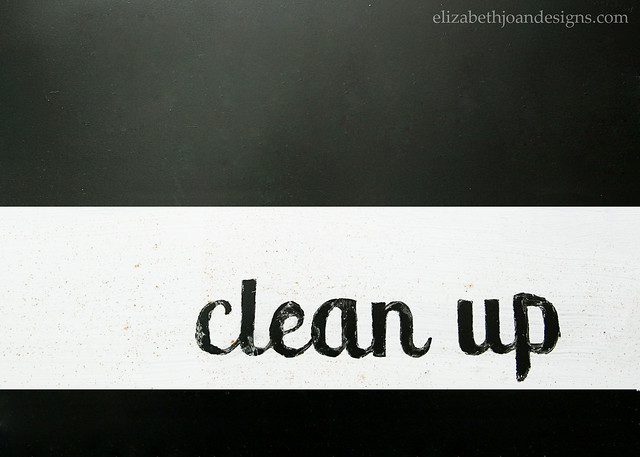
So I used a handy dandy craft knife to carefully peel the excess off. It actually worked pretty well.
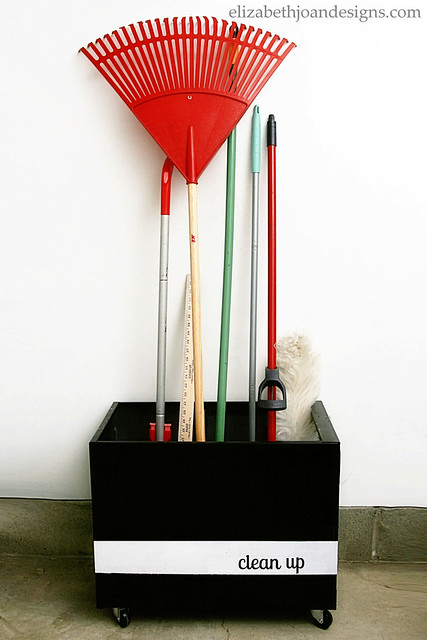
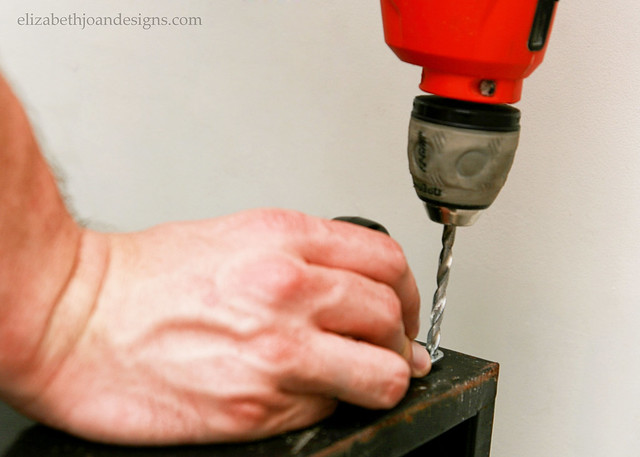
Then, my hubby helped attach four casters to the bottom, which would make it much easier to move our new garage storage around.

As simple as this project should have been, it ended up being a big pain in the rear because of all the little Oopsies. Luckily, they were able to be recovered, for the most part. (Sorry drawers. Enjoy your new life on the curb.)
The best thing about this project is that it was F-R-double-E. Free. In the future, we may add some sort of dividers along the top to help keep things more upright, but we are happy with how it turned out for now.

Linked up with East Coast Creative #cwts2014
-
Buffalo Chicken Meatballs
There are few foods (bacon, shrimp and lobster) that I love more than boneless buffalo chicken wings. So, when our family decided to reduce the amount of gluten that we consume, a small part of me died, knowing that I wouldn’t be able to enjoy my favorite wing joint in the same way.

Last week, I had a random craving for meatballs and unfortunately, we didn’t have any ground beef. I did have ground chicken in my freezer though, so I decided to use that instead. While gathering my other ingredients, I spotted some wing sauce, and that’s when it hit me. Buffalo. Chicken. Meatballs. I whipped up my own concoction to make these mouthwatering bites. Here is what you will need:

Note: We used crushed gluten free crackers in place of bread crumbs.
First, preheat your oven to 400°F. Melt the butter and whisk it together with the wing sauce.

Next, using your hands, combine the sauce combo with the rest of your ingredients in a medium sized bowl. You may get a little messy. Just sayin’.

Then, roll the mixture into balls and place them on an oiled cooking sheet. (I ended up with about 28 meatballs.) Bake for 25-30 minutes or until centers reach 165°F.

Serve with celery and your favorite dipping sauce. These buffalo chicken meatballs are AMAZEBALLS! My family gobbled them right up. They are so delicious and totally hit the spot when craving some yummy wings. We actually made this recipe 3 times in one week!

Buffalo Chicken Meatballs from Elizabeth Joan Designs
Yield
4 servings (serving size: 6 meatballs)Ingredients
– 1 lb. ground chicken
– 1/2 cup Frank’s Red Hot Wing Sauce
– 3 tbsp. butter or margarine
– 3/4 cup bread crumbs
– 1 large egg
– 1/2 tsp. sea salt
– 1/4 garlic powderPreparation
1. Preheat oven to 400°F.
2. Melt butter and whisk together with wing sauce.
3. Combine all ingredients with the sauce mixture in a medium bowl.
4. Roll mixture into balls and place on an oiled cooking sheet.
5. Bake for 25-30 minutes (or until centers reach 160°F.)
6. Serve with celery and blue cheese dip. -
Chalkboard Lettering
Back when I shared my dry erase board turned chalk board, several people had pondered about the process I used to create the lettering. It really is quite simple and probably any creature with opposable thumbs could do it.

Here is what you will need:
-Chalkboard
-Chalk
-Print Out (I whipped this puppy up in Photoshop, but you could easily create something in a word document, or physically cut out words with fonts you like.)
-Tape
-Pencil
Make sure your chalkboard is {primed.} Then start out by using the side of a piece of chalk and completely color over the backside of your print or words. This chalk dust is what will transfer onto the chalkboard later on in the process.

Turn the print over, carefully place it on the chalkboard, and tape it down. I just kind of eyeballed it to make sure it was centered. It doesn’t have to be perfect.

Using the pencil, trace around the outside edges of each letter and image. The pressure from the pencil tip will transfer the chalk.

Here, I lifted up a couple pieces of tape to check and see how things were looking. I decided that I wanted the letters filled in, so I went back and did that too.

Once you are finished, remove the print and you should have awesomeness on your chalkboard. That’s it! Easy peasy lemon squeezy.
